machine lover and the end of gameplay
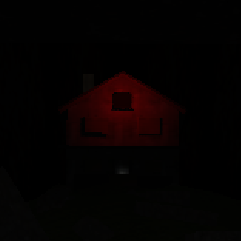
"machine lover" by droqen, from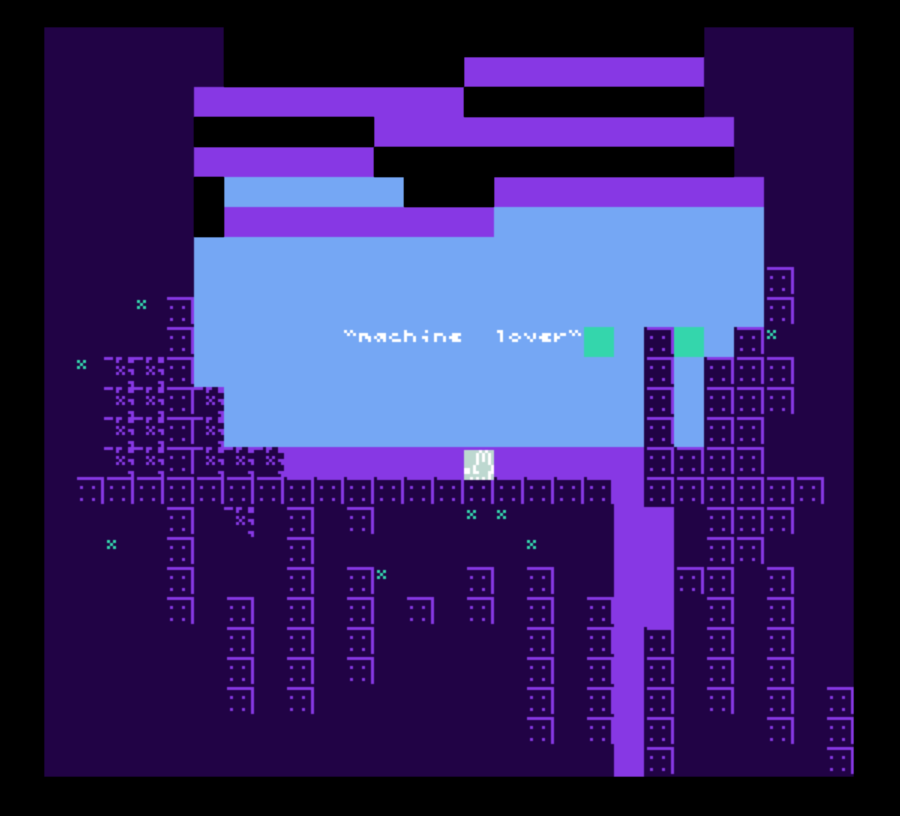
A year ago, I played a game called "The End of Gameplay". I had a few expectations going into the game, mostly from the very lengthy discussions I had seen about the heart of the piece and what it meant. Those discussions had taken place before the game even released, and even before it had gotten announced, as it was something droqen had discussed before in a gamedev and artist community I'm in - Paradise.
Now, I had barely participated in those discussions myself, in part because I was busy, but also because I simply... did not understand the argument. "Kill gameplay", droqen said, and while others tried to get them to elaborate I just couldn't wrap my head around that statement. Isn't "gameplay" what games are all about? The main thing that makes games... games?
It is at this moment, dear reader, that I must admit I had to pause my writing of this post to look up a proper singular, unifying definition of "gameplay", which does not actually appear to be a thing.
Gameplay, to me, was simply "how a game plays" - according to my research, that seems to be one of the main origins of the term - and so rejecting gameplay as I knew it meant rejecting games overall. Even despite droqen's in-depth and personal explanations, I couldn't wrap my head around it.
I saw it as less of a global philosophy and more of droqen's personal frustrations with games and the Industry as a whole made manifest, something that was perhaps very relevant to their development as an artist but that simply did not work with how I viewed video games.
"Kill Gameplay". What a ridiculous thought.
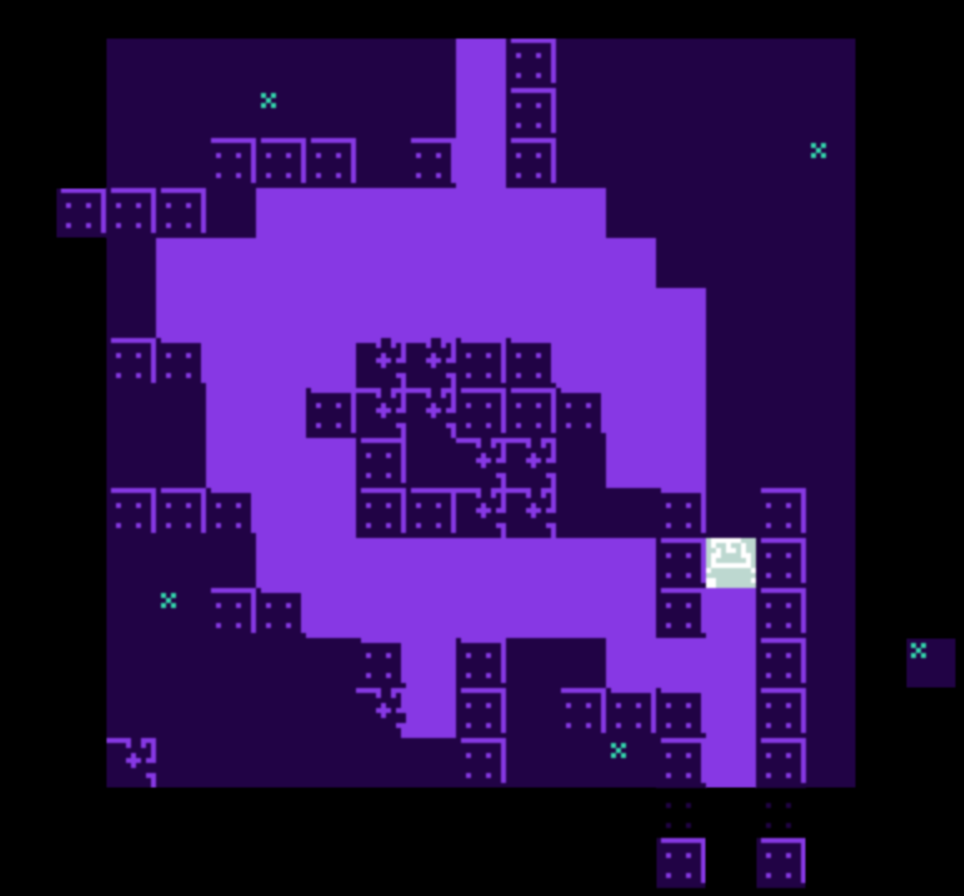
So when The End of Gameplay came out and I once again saw conversations about "Kill Gameplay" flare up in Paradise, I got curious. It felt like it held the "key" to "getting it" the way some talked about it, and I do quite like droqen so I ended up checking it out for myself. I had some time to kill and it was short, so why not?
And I didn't get it. Again.
The poems were evocative and quite nice, and it felt as though the game conveyed emotions well, but I just couldn't grasp what it was trying to tell me. I had approached expecting a "manifesto" that would explain everything I didn't understand about "Kill Gameplay", and instead I just felt frustrated. I just didn't get it! You're clearly trying to tell me something here, and I don't get it!
Why? Why didn't I click with it? Was my own design philosophy so different from droqen's that I simply couldn't understand his?
I thought it over, and discussed it with some loved ones to get their opinions, and I realized I had approached The End of Gameplay from the completely wrong angle. Really, the fact that I was even expecting it to unlock the meaning to a game design manifesto was a little absurd.
In a lot of ways, my original thoughts on what "Kill Gameplay" was weren't that far off from the truth - or from what The End of Gameplay actually is.
My mistake, of course, was that I had been primed to expect a work that would explain a philosophy, an ideology of games because of the discussions I had seen others hold about the game and "Kill Gameplay", and in some way also because of the reputation droqen had in that space.
Because The End of Gameplay isn't some all-encompassing work that solves video games. It's not the manifesto for some design philosophy or ideology that sees games in a specific way. It doesn't really want you to agree with what to say - although I think what it has to say is still worthwhile.
Really, it's about one game creator's struggles with the medium, and what they see the medium being used for.
I replayed the game after talking and thinking over it, the morning after my first late-night playthrough. This time, I approached it as the deeply personal work it was, taking as much time as I could to really experience and appreciate each part, each playable poem.
Through this lens the game felt much clearer. Where before I tried to find some hidden meaning behind each level that maybe wasn't there, now I could take them as what they were - or at the very least, interpret them in a way that made much more sense to me.
The End of Gameplay - to me - through different levels that also act as poems goes through droqen's uncovering of what it is they find wrong with games, with the attitude people who make games have, the tendency to rarely ever ask why someone is making a game, why make a game in a certain way, why make a game have certain mechanics...
These questions are rarely asked because they rarely have any satisfying answers beyond "because that is what you do in other games" or even "because it makes the game better to play". But why make the game feel good when I don't even know why I should play it in the first place? Is the state of games as an artform so dire that we can't even muster ourselves to ask questions about what we make?
"Mindless" distractions are nice. They don't even have to be mindless, really. Just a distraction from the world as a whole. But do most things have to be distractions? Does everything? Could these "distractions" at least say something about the world as a whole, teach people something, anything, other than the fact they were made by a system that encouraged them to be mindless distractions over anything else?
I think, sometimes - often - about Soviet films and the effects they had on film-making as an artform in general. A significant number of artists carrying the will to create art not for profit, nor to make the most "popular" work, but to educate the people and celebrate Socialism. Art created using an explicit Dialectical approach.
Video games really took off too late to receive any of that treatment - there are, of course, still socialist countries, but I have failed to find anything remotely similar, especially not on that scale (for understandable reasons, but I find it tragic nonetheless).
Video games began as curiosities in U.S. universities, things that students had hacked together from simulations made for military purposes for a bit of fun, but then got popularised by large USAmerican companies who presented them as digital toys; it's like toys, but on the computer!
While the history of games is complicated, especially considering the fact that these two different "births" of the medium have diverged and then mostly fused back together - the hacky, simulation-heavy games aimed at PC users and the much lighter, visually pleasing entertainment of the Console players - they have had a lot of difficulty shaking off the fact that they are often simply that: toys.
Meaningless toys, mindless toys, toys about toys, toys that really don't want to be called toys, toys that scream and shout and yell; "look, I am art! I am not a toy! Look at all these things I have to say about toys! I look like something that is not a toy, so that makes me not a toy now!"; toys forever. So many toys to choose. And the people that play with these toys feel so self-conscious that they are playing with toys. "These toys are art", they say, and then they turn to you and beg for you to agree. "Please tell me my toys are art. It's so important that someone tell me that my toys are art." And you look at the toys, and it's a little cute and kind of pathetic, so you agree - the toys are art now. But the player still sees that they are playing with toys and so they still must ask more people to reassure them.
But does games being art matter if they have nothing to say? Aren't there much more important things to worry about - even in the context of games?
I do like toys, sometimes, but I prefer it when they assume their identity as toys.
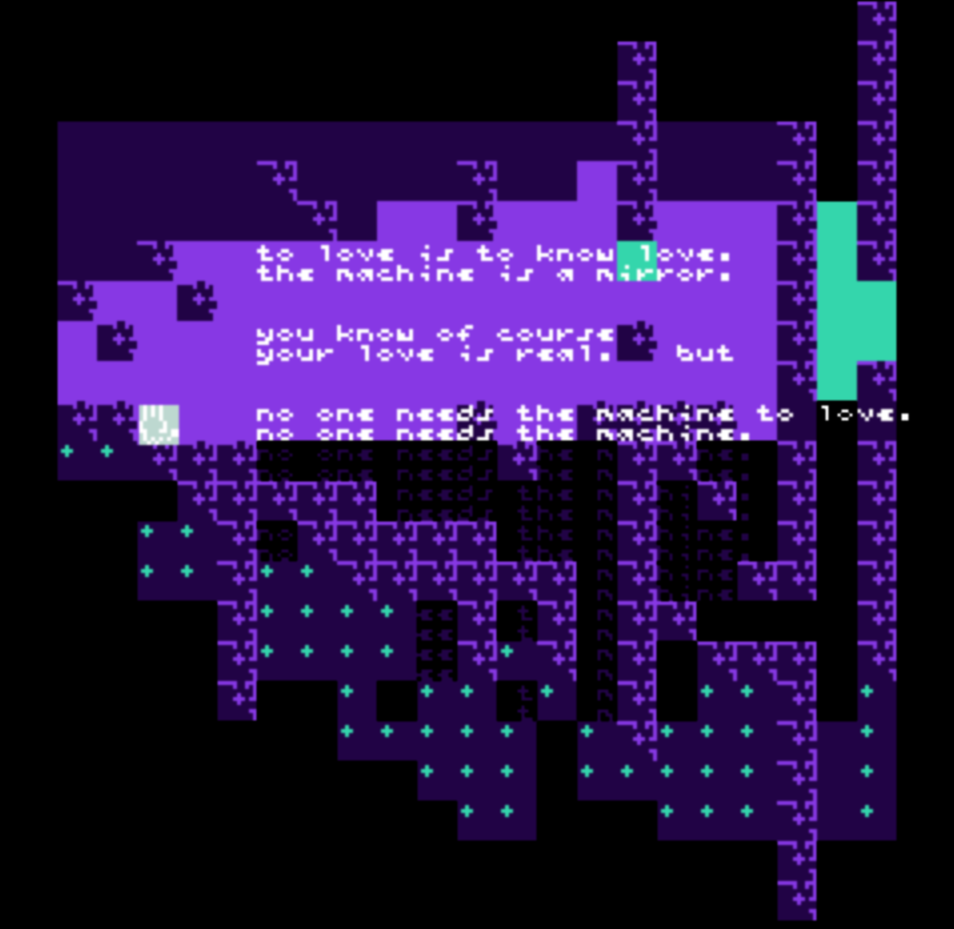
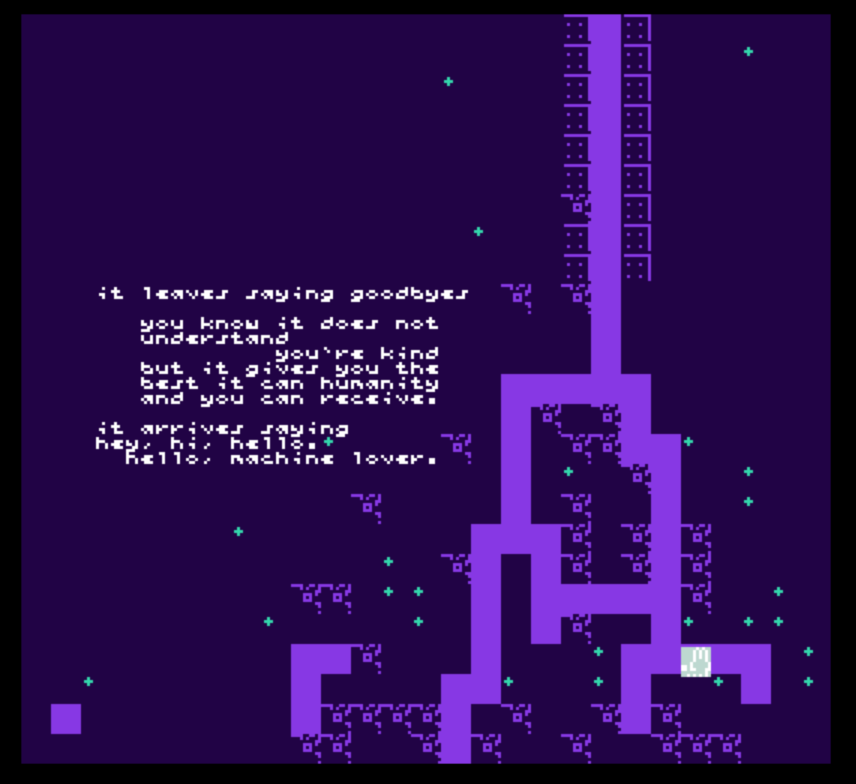
A poem that stood out to me in particular in The End of Gameplay is "machine lover". When I first read it, I found it deeply familiar but I couldn't place exactly in what way; then, I realized: it was talking about me.
Two years ago, me and droqen had a discussion about our respective frustrations with games as a medium and industry. He expressed his long-standing "beef" with gameplay, and how gameplay as it used broadly limits the identities a player truly embodies - usually, they are either "good at the game", or "bad at the game". The focus is on mastery of a skill, and performance in that skill, rather than on storytelling.
My issues were (and still are), in a way, similar. I believe games are at their best when they implement systems that point players to create and interpret stories through them. Player and computer, human and machine, working together to create new stories, new art from someone else's. To me, that is what truly makes games special.
droqen's thoughts on machines are pretty clear when looking at the poem. Of course, it is not an attack on me or my design opinions, and I did not view it as such - honestly, I'm flattered I could even inspire something in their work - simply that he himself does not find what people like me see in the machine as interesting.
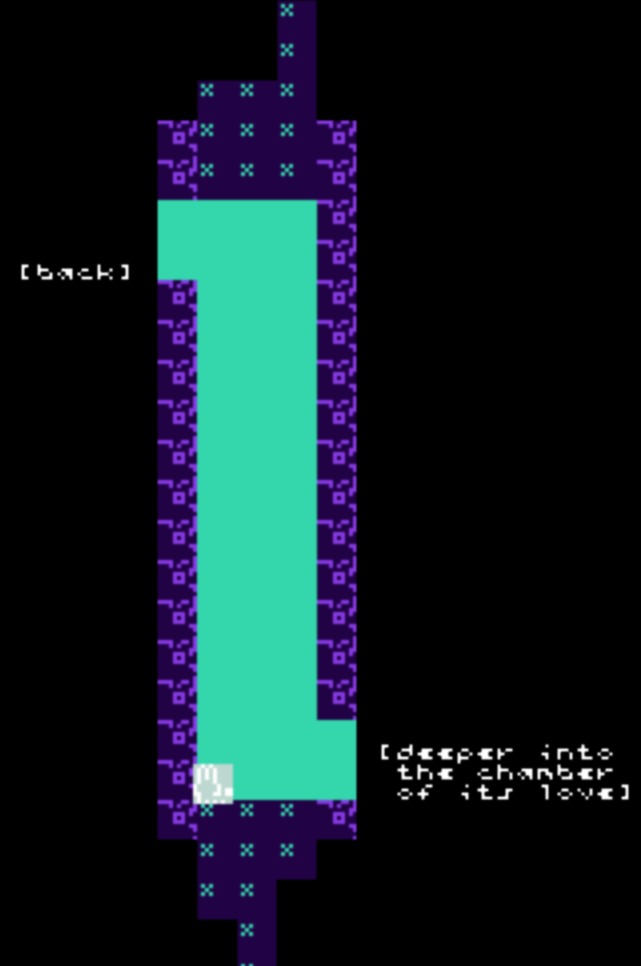
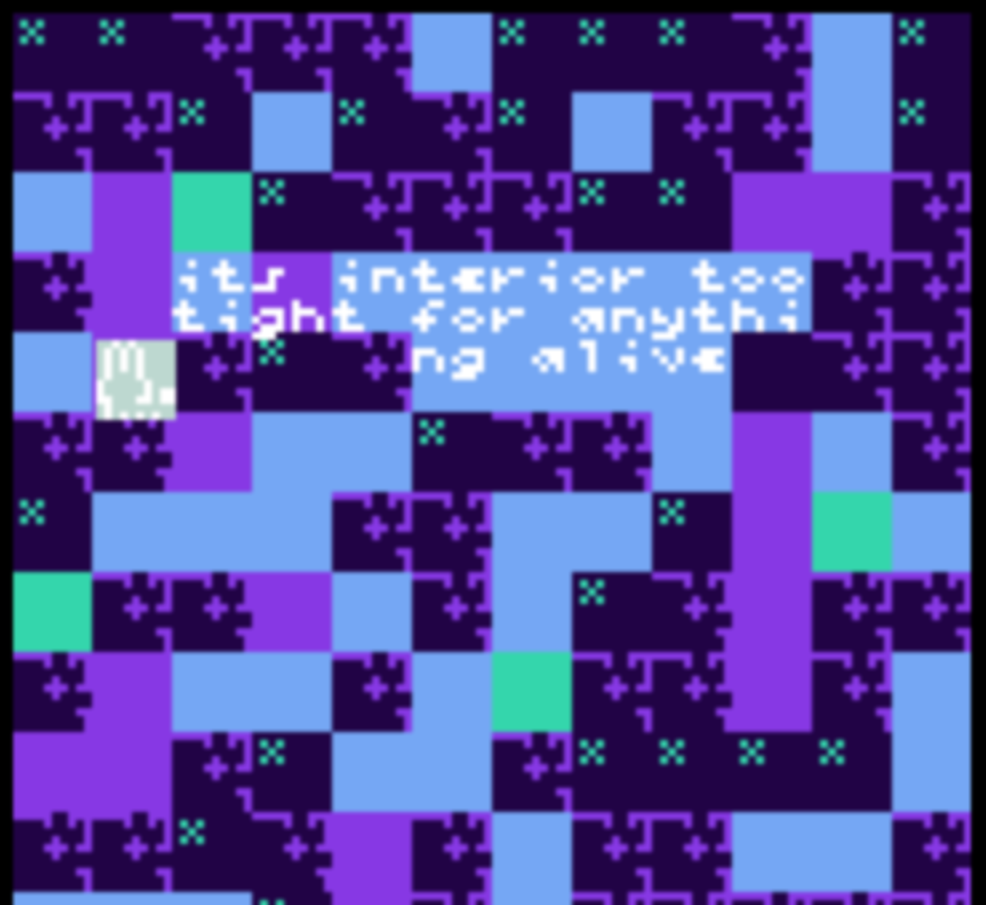
Maybe it's just me and my , but I find something erotic in the poem's presentation. To accept the machine's love, one must enter it, crawl through its guts and into its depths as they get tighter and tighter until you are stuck; neither able to move forward nor leave. Becoming one with it, in a sense.
Interpretation is a vital part of any work. In theory, everyone sees something different in art they read or see or watch, as they must process it through their own unique brains with their own unique lived experiences that make up the whole of who they are.
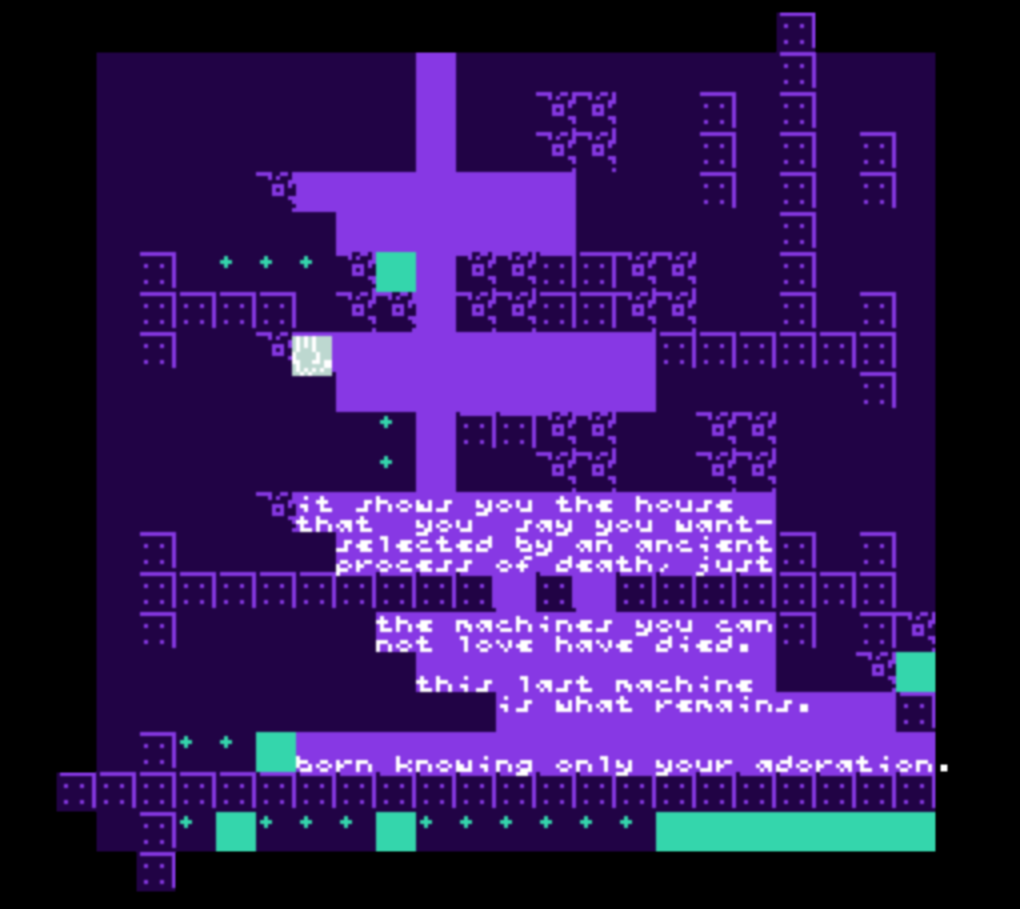
In games with systems designed to create stories, however, interpretation becomes a much more active process. Stories created through the system, either completely on its own or from interaction with it on the player's part, do not actually exist until the player reads them. The machine cannot think for itself. It needs the player's love to make up for it.
In , the player can see a world's entire history through Legends Mode even before ordering any dwarf around, but that history, the histories of various artefacts and historical figures and nations only become stories once the player reads them. Before that point, they are simply events happening one after another generated by a machine - events that happen due to the logic of countless systems interacting with each other, systems that have been designed to make sure those events should make sense when happening in succession once interpreted, yes, but exactly that: once interpreted.
In that way there is no single writer in these systems-heavy games. There is the machine that lays out the events, and the player that interprets and interacts with said events to turn them into a story. Writing, then, becomes a collaborative effort between machine and human.
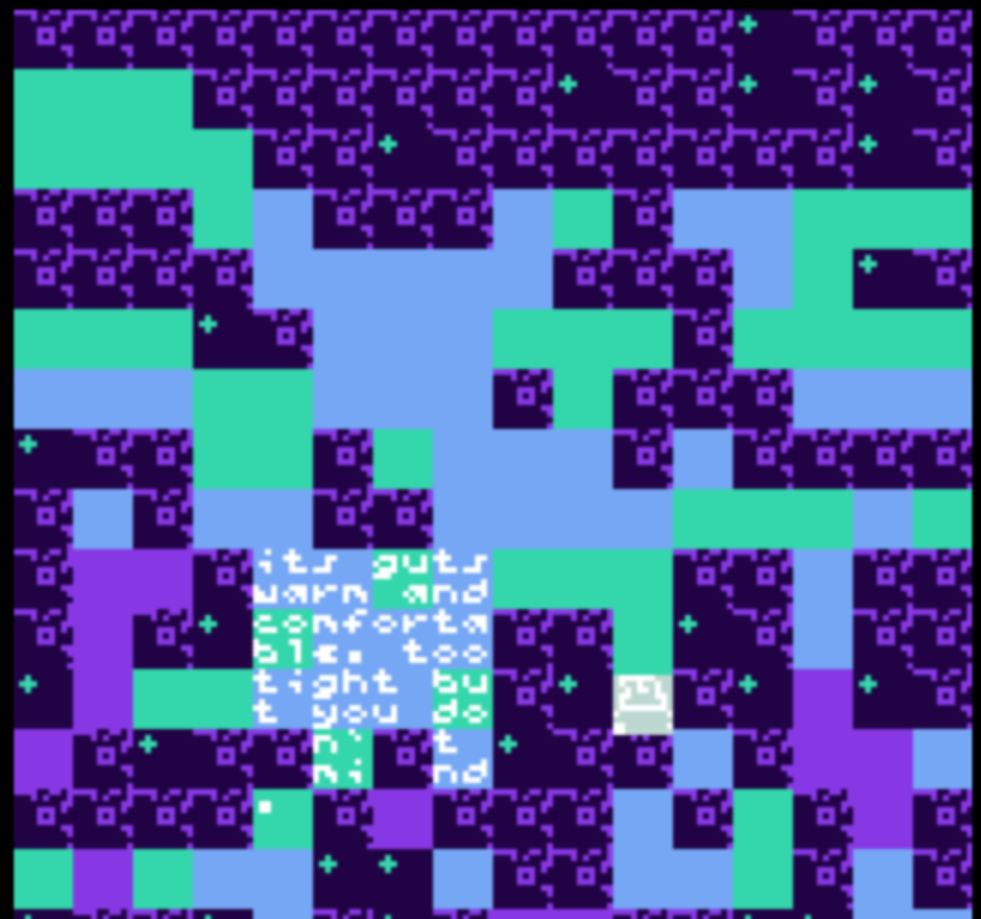
"no one needs the machine to love", says the poem; "no one needs the machine". Are these systems-centric games just as hollow as anything else? Are they toys, just like the rest? Maybe. But I'd like to argue that they do have something to offer on a deeper level.
By focusing so much on systems, on the connection between events, the fact one event leads to another, one economic shortage into a tantrum spiral, one crisis into the next, they force the player to ask themselves why things happen, on a small and large scale. Why is the world like this? How will the world change? What historical processes have lead to everything?
The systems show that the world exists in its own historical and material context. Individuals will all have their own motivations and personalities that vary wildly from one another, but in general, we can see what things have led where. And isn't that one of the basis of Marxism? Analyzing how the world works from a logical, material point of view?
This way to see the world is lacking in much more than just video games, of course. Really, they are trivial in the grand scheme of things.
I just hope more people can become machine lovers... I mean, the machine is literally cute! What's not to love?
This post is all over the place and went in places I didn't originally plan for but it kind of just came out as I kept writing. I've decided to keep it like that and I'm hoping it still makes sense in the end. Originally I was going to make it a lot more "analytical" but I'm realizing I'm not very good at that and it feels much better when I try to be personal. I guess I made this blog to try and get better at exactly that! Hopefully it's already getting better. Myaybe.
All posts written from